Patterns
Same job: get events from publishers in one account to consumers in another.
Two shapes — classic multi-bus (each account owns a bus; stitch with policies or bus-to-bus) or enhanced shared bus (one bus, AWS RAM, each consumer account creates its own Subscriber).
The question is not which diagram is prettier. It is when the shared bus earns the ceremony.
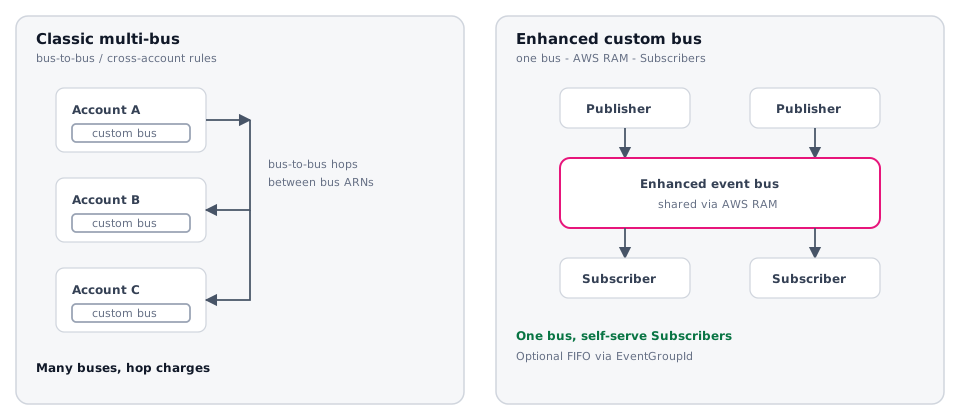
Left: hop between bus ARNs. Right: one enhanced bus, RAM share, Subscribers attach where they run. Click to zoom.
The two shapes
At a glance
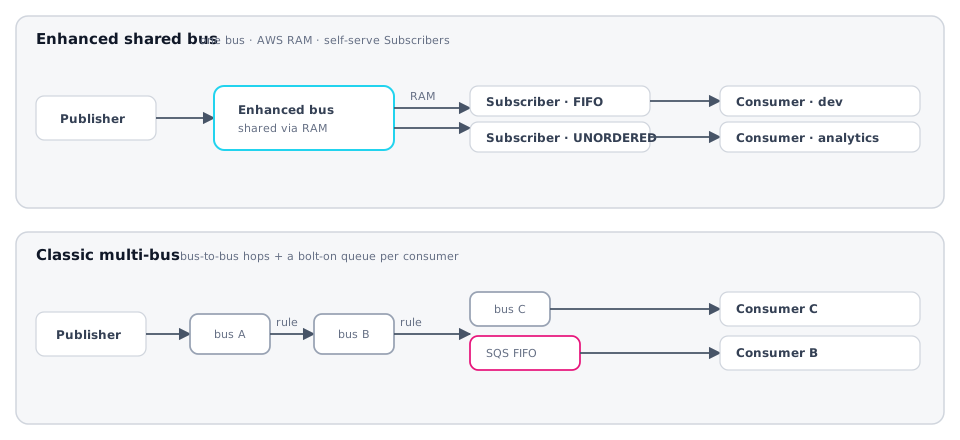
Classic grows hops and bolt-on queues per consumer. Enhanced keeps one bus; each consumer account attaches a Subscriber that owns its own filter, ordering, and DLQ. Click to zoom.
How the footprint grows
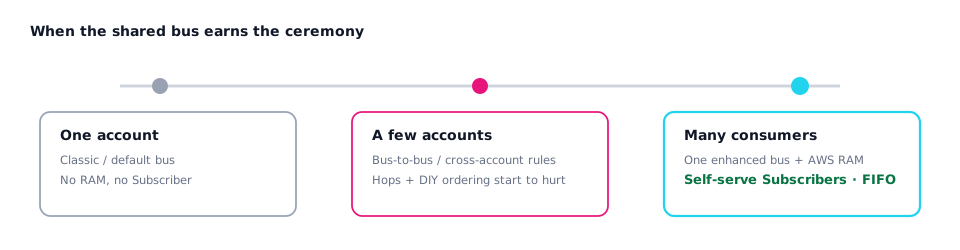
The three sections below map to these stages. The shared bus pays off at the right, not the left.
Which shape, by footprint
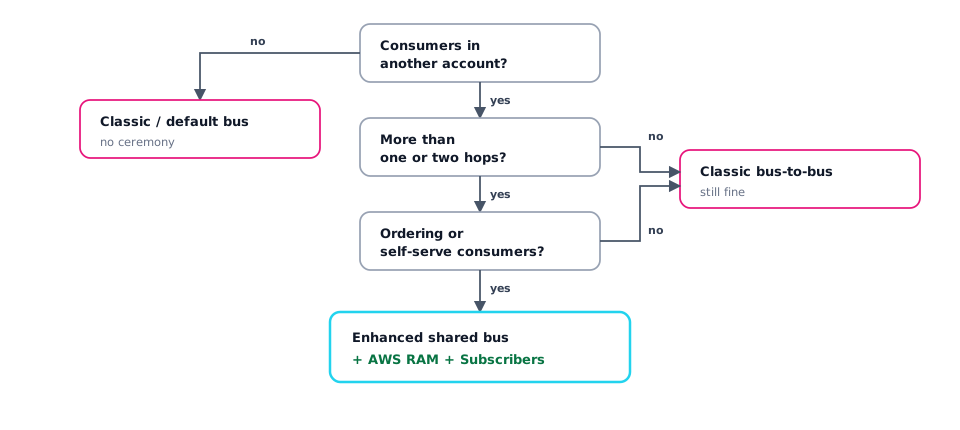
Same three stages as a yes/no path: only ordering or self-serve consumers at scale push you onto the enhanced bus.
1 · One account — no win yet
Publisher and consumer in the same account: a classic custom bus (or the default
bus) is enough. Rules and targets stay local. No RAM, no Subscriber resource, no
eventsv2 surface.
Enhanced can do the same work, but you pay for a new ARN shape, retention settings, and a Subscriber model you do not need yet. Ceremony you do not use.
Prefer classic. Enhanced is optional for that footprint.
2 · A few accounts — hops start to hurt
The usual scale-up is a bus per account, then cross-account rules or bus-to-bus targets so events reach the next owner. That works for one or two hops. It gets expensive and opaque when:
- every new consumer needs the bus owner to add another rule or hop,
- hop charges stack on the path,
- ordered processing means bolting SQS FIFO (or similar) in front of each consumer that cares.
At that point you are still solving routing between buses, not sharing one bus.
3 · Many consumers on one stream — prefer enhanced


Prefer the enhanced shared bus when several of these are true:
| Signal | Why it matters |
|---|---|
| Same event stream, many accounts | One bus ARN; RAM principals attach as publishers or Subscribers |
| Consumers want self-serve | A Subscriber is filter + target + retry + DLQ — no bus-owner ticket per rule |
| Mixed ordering needs | FIFO and unordered Subscribers on the same bus |
| Retention / replay on the bus | Built-in retention instead of a separate archive story |
| Clearer cost split | Ingress (publish) vs egress (delivery) instead of stacked hop economics — Cost |
That is the shape this site builds: lab owns the bus, eb-bridge, and the
RAM share; dev creates a Subscriber. Worked hop-vs-GB sketch: Cost.
Classic (aws events) |
Enhanced (aws eventsv2) |
|
|---|---|---|
| Cross-account | Bus policy / bus-to-bus | RAM share of one bus |
| Consumer unit | Rules + targets | Subscriber |
| Event selection | Often bus-owner rules | Consumer DATA filter on the Subscriber |
| Ordering | DIY (often SQS FIFO) | FIFO Subscriber + EventGroupId |
| Retention | Archives (optional) | Built-in retention |
| Bus ARN | event-bus/<name> |
event-busv2/<name>/<generated-id> |
Classic buses remain available as Custom event bus – classic. This lab creates only the enhanced bus.
4 · Sharing is not free
A shared bus concentrates the control plane the way a shared DNS hub does.
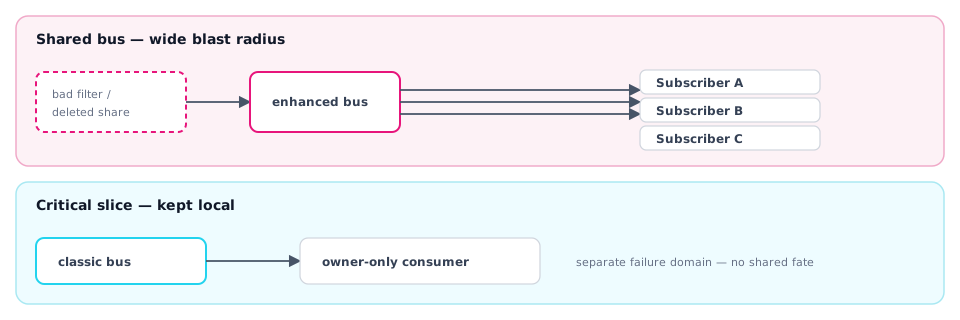
One misconfig on the shared bus reaches every Subscriber. Keep fate-sensitive streams on a separate bus — mixing shared and local is the normal design, not a failure.
Blast radius. A bad filter, deleted share, or bus misconfig can affect every Subscriber on that bus. Classic multi-bus keeps failure domains closer to each account — at the cost of hops.
Who owns the bus. Someone must own create, retention, and the RAM share (here: lab). Consumer accounts own their Subscribers and delivery IAM (here: dev). Do not pretend “self-serve” means “no owner.”
Escape hatch. Keep a classic bus (or a second enhanced bus) for streams that must not share fate with the backbone. Most traffic on the shared bus; critical slices stay local. Mixing is normal — forcing everything onto one bus is not.
UNORDERED vs FIFO
Both Subscriber types attach to the same enhanced bus. Choose per consumer — not per bus.
| Type | Prefer when | Requirement |
|---|---|---|
UNORDERED |
Fan-out, analytics, best-effort — delivery order does not matter | None |
FIFO |
Per-entity sequence must hold (OPEN before CLEAR, step N before N+1) | Publishers set SystemMetadata.EventGroupId |
Same two events (OPEN then CLEAR for one device), delivered two ways:
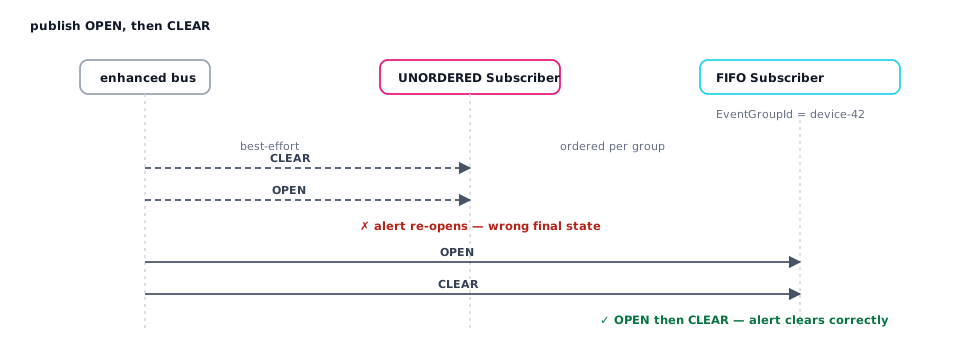
UNORDERED can deliver CLEAR before OPEN and leave a stuck alert. FIFO keyed by EventGroupId holds per-device order so state converges.
Without EventGroupId, FIFO cannot group — you lose the ordering guarantee.
Do not make every Subscriber FIFO “just in case”; you pay ordering constraints
for no gain. An unordered Subscriber on the same events is valid.
This demo uses one FIFO Subscriber (health-fifo) so Verify can prove
OPEN → CLEAR → button order. Lab contract: Design.
CLI: Deploy dev.
Publish APIs
| API | Prefer when |
|---|---|
put-events |
Familiar Source / DetailType / Detail envelope (this lab) |
put-raw-events |
Raw or CloudEvents payloads |
Bridge and verify use put-events only.
What we skip on purpose
Content-based deduplication and JSONata reshape exist on the enhanced bus. They are not required to prove RAM share + Subscriber + optional FIFO.
Next: Design for the resource map, Cost for hop vs GB economics, then Demo for the CLI path.